Hegemony under scrutiny
The World Cup is no longer a walk in the park for the traditional powerhouses. As we observe the group stage, the tactical reality dictates an implacable sentence: a name on the jersey is not enough. If we analyze the cold hard data, teams like France and Argentina have done their homework with surgical efficiency, but behind them lies a worrying performance gap in teams that arrived at the event as solid candidates.
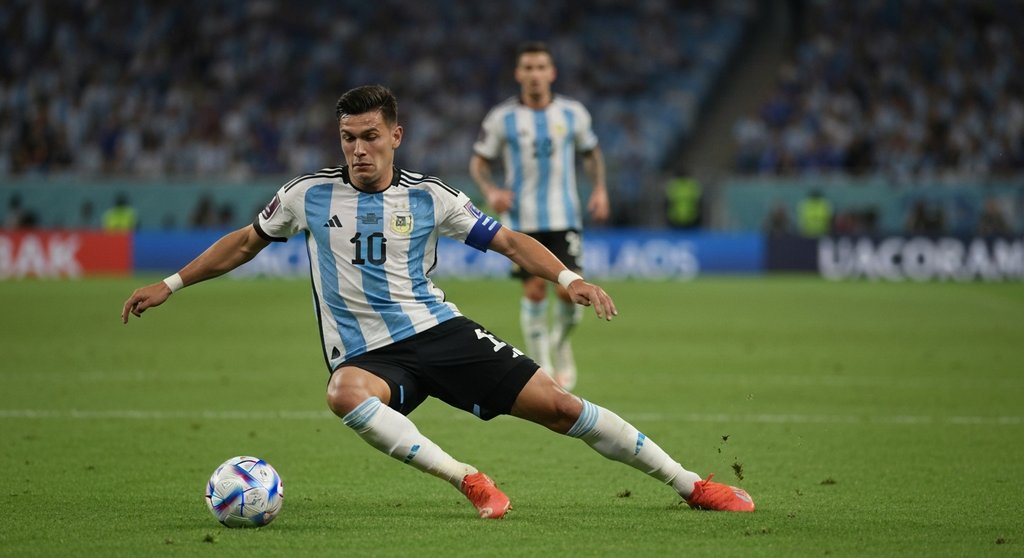
Scaloni’s Argentina, for example, is not a product of chance. Under a structure of absolute balance, the hierarchy of players like Enzo Fernández in distribution and the physical deployment of Rodrigo de Paul have allowed the defensive machinery, shored up by a Dibu Martínez who transmits unwavering security between the posts, to be the true engine of the team. It is not just about firepower; it is about positional control. On the other side, France demonstrates that the transition of Kylian Mbappé, with 10 goals already to his name, is simply undefendable for any mid-block, well-assisted by a Michael Olise who is, statistically, the beacon of the tournament with 7 assists.
However, let’s look towards England or Brazil. While they have advanced, they have done so with an air of tactical doubt. The reliance on the individual flashes of Jude Bellingham or Harry Kane in the English case, or the intermittent magic of Vinícius in the Brazilian scheme, sometimes seems insufficient to overcome compact systems. Meanwhile, the real sensation is Morocco, a unit that has defied the laws of logic and hierarchy, maintaining an enviable tactical solidity.
Top 5 Goalscorers and Assist Providers
| Player | Goals | Assists |
|---|---|---|
| Kylian Mbappé | 10 | 4 |
| Erling Haaland | 7 | – |
| Jude Bellingham | 7 | – |
| Ousmane Dembélé | 6 | – |
| Harry Kane | 6 | – |
| Michael Olise | – | 7 |
| Bruno Guimarães | – | 4 |
| Martin Odegaard | – | 4 |
| Brahim Diaz | – | 4 |
It is evident that the tournament is rewarding tactical discipline over big names. While powerhouses like Uruguay or Turkey struggle to impose their style, less heralded teams are taking advantage of the fissures in the defensive transition of the ‘big’ teams. It is clear: the trophy is not won on paper, but in the ability to adapt the system to the reality of the pitch. The World Cup, far from being predictable, has become a game of chess where the slightest tactical miscalculation is paid for with elimination.
Sincerely,
Jacinto Perplejo
See all offers on Amazon →
Photo: Generated by AI (Gemini Image) / Free License
By Jacinto Perplejo