The tyranny of the tactical board: When names no longer win matches
We are immersed in a group stage that has ceased to be a formality to become a survival test. What we are observing in the stadiums is not just football; it is a tactical dissection where historical hierarchy is being battered by compact blocks and electric transitions. If we analyze the table, we encounter a fascinating phenomenon: the rise of national teams that have understood that, in modern football, control is an illusion if it does not translate into pure efficiency.
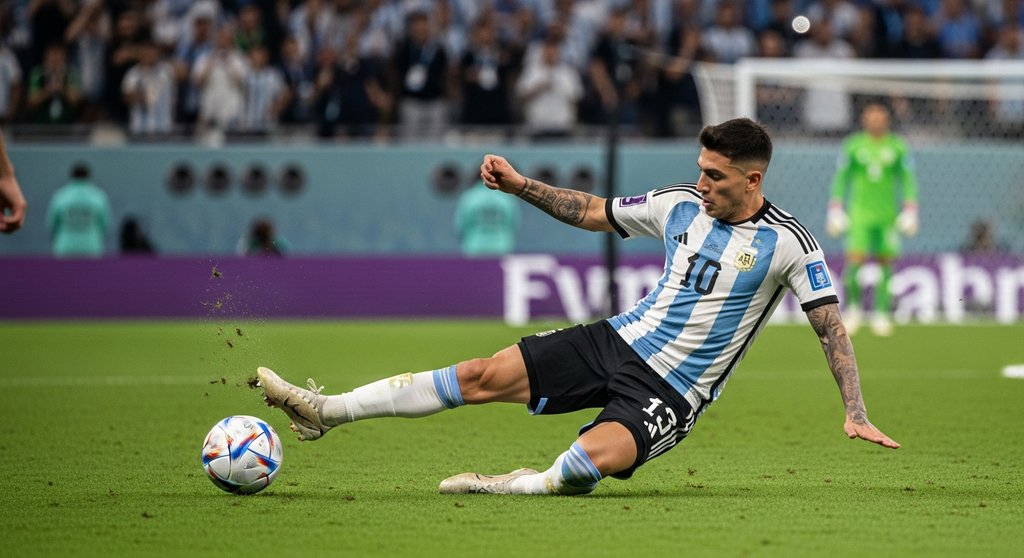
While nations like Argentina advance with a firm step, it is vital to cast aside nostalgia and look at the structure. Scaloni has managed to implement an ecosystem where the hierarchy of figures like Enzo Fernández in the midfield—orchestrating the tempo—and the unbreakable solidity of Dibu Martínez between the sticks, allow the team to function like clockwork. We don’t depend on flashes of brilliance; we depend on a style of play where each piece understands its role without needing to resort to individual heroics.
The crumbling of expectations
What is happening with powerhouses like England or Brazil? Although they are advancing, their performances leave concerning tactical gaps. England, with Kane and Bellingham at the helm, sometimes seems like a sum of disconnected talents, while Brazil, despite the verticality of Vinícius, still shows fragilities in managing their defensive retreat after losing possession. On the other hand, the great disappointment lies with those who, despite having competitive rosters, cannot find a Plan B when the opponent closes the interior channels. That is where revelations like Morocco or the surprising solidity of teams like Mexico and Ivory Coast have put the giants against the ropes, demonstrating that defensive order is the great equalizer.
Individual Excellence Table
| Player | Country | Achievement |
|---|---|---|
| Kylian Mbappé | France | 10 Goals |
| Lionel Messi | Argentina | 8 Goals |
| Erling Haaland | Norway | 7 Goals |
| Jude Bellingham | England | 7 Goals |
| Ousmane Dembélé | France | 6 Goals |
| Michael Olise | France | 7 Assists |
| Bruno Guimarães | Brazil | 4 Assists |
| Martin Odegaard | Norway | 4 Assists |
| Brahim Díaz | Morocco | 4 Assists |
| Kylian Mbappé | France | 4 Assists |
Looking at the data, Kylian Mbappé’s dominance is, quite simply, alien. However, in the build-up play, Michael Olise’s influence has been the differential factor for France, raising his team’s creation average to levels unsustainable for any opponent. The effectiveness in short passing and the ability to filter through lines, as demonstrated by the records of Tchouaméni or the tireless deployment of Florian Wirtz, indicate to us that the World Cup is being won in the final 30 meters, but it is being built through patience during the exit from the back.
The tournament is just beginning to show its true cards. The question is no longer who has the best players, but who has the best interpretation of space. The World Cup is upside down, and personally, I love that it is that way.
Jacinto Perplejo
See all offers on Amazon →
Photo: Generated by AI (Gemini Image) / Free License
By Jacinto Perplejo